How Ziplining Went from Transportation to Tourism: A 2,000-Year History
How Ziplining Went from Transportation to Tourism: A 2,000-Year History
Ziplining is an exciting activity that many enjoy today as part of their tourist adventures. However, what many people don’t know is that ziplining has a history that stretches back more than 2,000 years. What began as a means of transportation has evolved into an extreme tourism attraction that draws thousands of people each year. In this article, we’ll explore how ziplining went from being a functional means of transportation to a recreational activity that is part of global adventure tourism.
1. The Origin of Ziplining: A Practical Means of Transportation
Ziplining didn’t begin as a tourist activity, but rather as a practical transportation system used by various ancient cultures to traverse geographical obstacles, such as rivers, canyons, and deep valleys. The earliest versions of ziplining were extremely simple, using ropes or vines strung between dos elevated points to allow the passage of people, animals, or goods from one place to another.
How was it used?
- Fast and efficient: In hard-to-reach areas, such as mountains or rainforests, suspended ropes allowed people to cross distances without having to hike long distances.
- Adapted to the local geography: The first civilizations to use the zipline adapted the design to the terrain, often using vines or ropes made from local plants, and in some cases, the systems were improved with wooden or metal structures.
Historical example: The tribes of Vanuatu
One of the oldest documented uses of the zipline is found on the island of Vanuatu in the South Pacific. The tribes of this island used vines to create suspension bridges, and young men participated in coming-of-age rituals in which they jumped from a raised platform, gliding to the ground on the ropes. This rite is a primitive version of the modern zipline.
2. The Evolution of the Zipline: From Functional Tool to Adventure Attraction
Over the centuries, the use of the zipline as a means of transportation became limited, as technologies and advances in transportation infrastructure (such as bridges, roads, and railways) made the zipline less necessary for daily life. However, in recent decades, the concept of the zipline began to transform into a recreational activity.
1980s: The Birth of Zipline Tourism
In the 1980s, the zipline took its first step toward adventure tourism when adventurers and tour guides began using the suspended ropes not only as a form of transportation but also as an attraction in national parks and ecotourism areas.
Early Tourist Destinations:
- Costa Rica: In the 1980s, Costa Rica began developing the concept of adventure tourism in its rainforests. Visitors could glide through the treetops to observe the flora and fauna from a unique perspective.
- USA: In some adventure parks in the United States, ziplines began as a way to offer tourists thrilling experiences without harming the environment.
3. Ziplining Today: A Global Adventure
Today, ziplining is one of the most popular activities in ecotourism and adventure tourism. Thousands of destinations around the world offer this exciting activity that attracts tourists of all ages. Zipline routes not only allow you to see breathtaking landscapes but also offer a unique sense of adrenaline and freedom.
Where can you zipline?
- Natural parks and ecological reserves: Many of the most exciting ziplines are located in areas of great natural beauty, such as forests, mountains, and rainforests.
- Urban destinations: Some large cities have embraced ziplining as a form of entertainment, creating zipline routes in the city center or even over rivers and buildings.
Famous Ziplines Around the World:
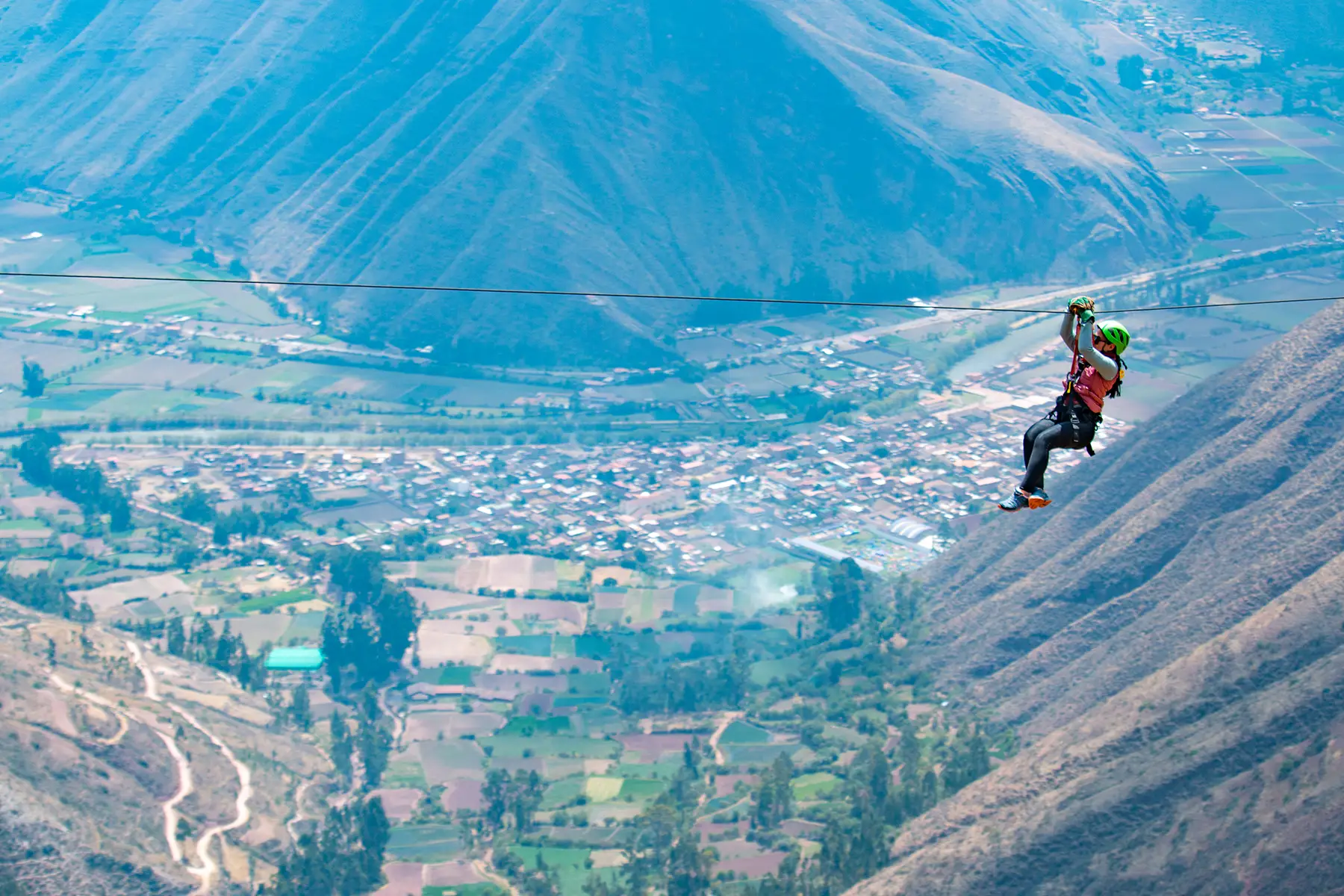
- Sacred Valley, Peru: The zipline over the Sacred Valley of the Incas allows tourists to glide through breathtaking landscapes, combining history and adventure.
- Victoria Falls, Zimbabwe/Zambia: The zipline over the famous Victoria Falls is one of the most spectacular ziplines in the world, offering stunning views of the world’s largest waterfall.
- Nile River, Uganda: Jumping over the Nile River while gliding on a zipline is a unique experience that has attracted adventurers from all over the world.
4. Benefits of Ziplining as a Tourist Activity
The zipline has evolved from a functional tool to an extreme tourism experience that offers benefits for both tourists and the destinations that offer it.
Advantages for Tourists:
- Accessible Adventure: The zipline is an activity that can be enjoyed by people of all ages and abilities. Physical fitness is not a requirement. Although exciting, it is relatively easy to do.
- Unique views: Ziplines often offer views that cannot be seen from the ground, such as aerial views of forests, mountains, lakes, and rivers.
- Connection with nature: Gliding through the air connects you in a unique way with the natural environment, creating a sense of freedom and adventure.
Advantages for tourist destinations:
- Boost to ecotourism: Ziplines promote tourism in natural areas, which can generate income for the conservation of these spaces.
- Job creation: Zipline companies create jobs in local communities, both in the installation and operation of the systems.
- Promotion of sustainability: When managed responsibly, ziplines can promote sustainable tourism, as they are a low-impact activity.
5. The Future of Ziplining: Innovations and New Trends
The future of ziplining looks promising, with new innovations and trends taking this activity to new heights. Some of the most exciting trends include:
- Longer and faster ziplines: Some destinations are developing longer and faster ziplines, offering tourists a much more intense freefall sensation.
- Nighttime ziplines: Some locations are starting to offer nighttime ziplines, where tourists can glide through the air under the stars, adding a unique touch to the experience.
- More interactive ziplines: Some new routes include game elements or challenges, such as automatic brakes that allow participants to control their speed and perform tricks while gliding.
Discover the evolution of ziplining with SamsZipline.
Fly through history. Feel the thrill. Live the moment.
From ancient rope crossings to a world-class adventure, ziplining has evolved over more than 2,000 years to become one of the most exciting experiences in modern tourism. Today, that evolution comes alive as you glide through the air, combining history, engineering, and adrenaline while flying over the legendary landscapes of the Sacred Valley. This is more than a ride — it’s a connection between the past and the present that stays with you long after the flight ends.
Modern technology. Maximum safety. Timeless excitement.
At SamsZipline, every detail reflects that evolution. Certified equipment, advanced safety systems, and expert guides ensure a smooth, controlled, and comfortable experience. From the moment you arrive, our professional team is fully focused on your safety and enjoyment, allowing you to relax and simply enjoy the sensation of flying.
Easy to experience. Hard to forget.
We take care of everything so your adventure is effortless. With organized logistics and personalized assistance, all you need to do is arrive ready to fly. No stress, no complications — just step into history and experience the future of ziplining in the Sacred Valley.
FAQ´S
1. Where does ziplining come from and why is it considered an ancient practice?
Ziplining originated over 2,000 years ago as a practical way for ancient cultures to cross rivers, canyons, and valleys using ropes or vines. What began as transportation has evolved into a modern adventure experience that combines history, engineering, and adrenaline.
2. How is modern ziplining different from its ancient versions?
Modern ziplining uses advanced engineering, certified materials, and strict safety systems. Unlike ancient rope crossings, today’s ziplines are designed for comfort, control, and enjoyment, guided by trained professionals who ensure a smooth and secure experience.
3. Why is the Sacred Valley a special place for ziplining today?
The Sacred Valley offers a unique combination of dramatic landscapes, history, and natural beauty. Ziplining here allows travelers to experience the evolution of this ancient practice while flying over one of the most iconic regions in the world, making the adventure both meaningful and unforgettable.